Do Dental Crowns Feel Like Real Teeth?
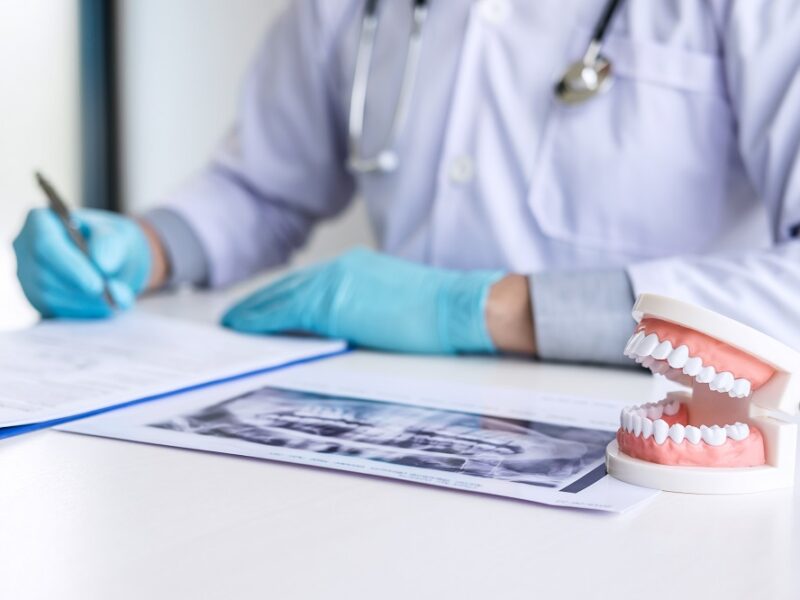
If you have been told you need a crown, one of the first questions that tends to follow is simple and very human: will it feel like my real tooth?
The short answer is yes, most dental crowns can feel very close to a natural tooth once your mouth adjusts and the crown is properly shaped, fitted, and bonded. The longer answer is more useful, because not every crown feels perfect right away, and not every kind of “different” means something is wrong.
A well-made crown does not restore the exact biology of a natural tooth. It cannot recreate living enamel, and if the tooth has had root canal treatment, it will not have the same internal sensation as a vital tooth. But from a day-to-day standpoint, meaning how it feels when you bite, speak, chew, and run your tongue over it, a good crown should blend in enough that you stop noticing it.
That last part matters. Patients often assume success means a crown feels identical from the first hour. In practice, success more often looks like this: it feels a little foreign at first, then less noticeable after a few days, then it becomes part of the background. Most people do not spend their day thinking about a crown that was done well.
What a dental crown actually replaces
A crown is a cap that covers the visible part of a damaged or weakened tooth. Dentists use crowns for several reasons, including large cavities, fractures, worn teeth, teeth after root canal treatment, and cosmetic reshaping. In many cases, the crown is not there because the tooth failed completely. It is there because the tooth needs structural help to keep functioning.
That distinction affects how the crown feels. If a natural tooth had a crack, a rough edge, or pain when biting before treatment, the crowned tooth may actually feel better than it did originally. Patients sometimes describe that as “stronger,” “smoother,” or “more stable,” even if they are still aware of it for a short time.
A crown replaces the outer surface shape of the tooth, not the ligament around the root or the neighboring teeth and gums. Those surrounding tissues still provide much of the bite feedback you feel. That is one reason crowns can feel surprisingly natural when they are adjusted properly. Your mouth is very good at adapting to a restored surface if the size, contour, and bite contacts are right.
Why a new crown can feel strange at first
The tongue is unforgiving. It notices tiny changes in contour that the eye would never catch. A crown can be polished beautifully and still feel “different” simply because it is new.
Patients commonly notice a few things in the first several days. The crown may feel slightly fuller than the original tooth, especially if the old tooth was broken down. The bite may feel unfamiliar because chewing pressure is now landing on a restored shape instead of a worn or damaged one. The gum around the crown may also be a bit tender from the procedure itself, particularly if there was a temporary crown beforehand.
That early awareness is normal. The mouth has a habit of checking new dental work constantly with the tongue, much like you keep touching a new haircut or a small cut on your lip. The attention can exaggerate the sensation. Once the novelty wears off and the brain stops monitoring it, the crown often seems to “shrink” into normality.
The adjustment period is usually short. Many people settle in within a few days. For others, especially if Dental Crowns the crown replaced a tooth that had been damaged for a long time, it can take a couple of weeks to feel fully natural.
What “natural” really means in daily life
When patients ask whether dental crowns feel like real teeth, they are usually asking about several different experiences at once.
They want to know if they will feel pressure when chewing. They want to know if cold drinks will sting. They want to know if the crown will feel bulky or obvious when they talk. They want to know if it will click against the opposite tooth in a way that feels artificial.
A properly fitted crown should let you bite comfortably and speak normally. Its surface should feel smooth, not rough or chalky. Floss should pass through with normal resistance, not shred or catch sharply. The contact with the opposing tooth should feel balanced, not high and jarring.
What it will not always do is mimic the exact sensory response of untouched enamel. Natural teeth have layers, tiny variations in texture, and in some cases temperature sensitivity that a crown may not reproduce exactly. Ceramic and porcelain can feel extremely tooth-like, but they are still engineered materials. Metal and porcelain-fused-to-metal crowns can also function very well, though some patients notice a slightly different feel depending on the location in the mouth and how much of the biting surface is porcelain versus metal.
Still, function tends to matter more than perfect imitation. If you can chew without pain, speak without noticing it, and stop thinking about the crown by the end of the week, that is usually a very successful outcome.
The biggest factor is the bite
If I had to name one detail that determines whether a crown feels “real,” it would be the bite.
A crown that is even a little too high can feel wrong immediately. Patients describe it as bumping first when they close, tapping before the other teeth touch, or creating a pressure point when chewing. Sometimes the difference is tiny, but teeth and jaw joints are sensitive enough that a small excess can feel huge.
This is why bite adjustment matters so much. A crown may look excellent on an X-ray and still need a minor polish on the biting surface. Once adjusted, the tooth can go from distracting to comfortable within minutes.
On the other side, a crown that is too low or not contacting properly can also feel off. It may not hurt, but chewing can seem inefficient or “empty” on that side. People sometimes shift their bite without realizing it, which can strain neighboring teeth or jaw muscles.
Dentists check crown bite with articulating paper, but the patient’s feedback is just as important. A person knows when something feels high, pinched, or uneven, even if the marks on the paper seem minor. Good crown work is part technical, part biological, and part listening carefully to what the patient feels.
Materials make a difference, but less than most people think
People often assume the material alone determines whether a crown feels natural. Material does matter, but fit and contour matter more.
All-ceramic and porcelain crowns are popular because they can mimic the translucency and smoothness of enamel, especially on front teeth. Zirconia crowns are strong and increasingly refined in appearance and feel. Porcelain-fused-to-metal crowns have served patients well for decades, particularly in areas that need durability. Gold crowns, while less common cosmetically, have a long record of excellent function and can feel remarkably kind to the bite because of how precisely they can be shaped.
Each material has trade-offs. A highly esthetic front crown may look beautiful but still feel slightly unfamiliar for a few days because your tongue notices the contour. A strong back molar crown may feel almost invisible in function but look less lifelike if it is made from a more opaque material.
From the patient’s perspective, the following factors usually influence feel more than the brand or material name:
- how accurate the fit is at the edges
- whether the bite is balanced
- how natural the crown’s shape and contact points are
- whether the underlying tooth is alive or has had root canal treatment
- how healthy the surrounding gum is
That last point gets overlooked. A technically good crown can still feel irritated if the gum around it is inflamed. When the margin sits well and oral hygiene is good, the tissue usually settles and the crown feels far more natural.
Front teeth and back teeth feel different for different reasons
Crowns on front teeth tend to be judged more by awareness, appearance, and speech. Crowns on back teeth are judged more by chewing comfort.
A front crown may feel slightly more noticeable at first because the tongue frequently contacts the backs of the upper front teeth during speech. Even a subtle change in length or contour can catch your attention, especially when saying sounds like “s,” “f,” or “th.” That does not mean the crown is wrong. It often means your mouth is recalibrating to a new shape.
Back teeth are less visible, but they carry heavier forces. A crown on a molar needs to fit into a complicated landscape of grooves and contact points. If it is just a touch off, you may feel it every time you chew. People are sometimes surprised that a back crown can feel more intrusive than a front one, even though they cannot see it in the mirror.
There is also a psychological piece here. A front crown can become the center of your attention because you expect to notice it. A back crown may disappear quickly if it works well, because it asks less of your awareness.
If the tooth had a root canal, the sensation may be different
This is one of the most common sources of confusion. A crown placed on a tooth that has had root canal treatment can function beautifully and still not feel exactly like a neighboring untouched tooth.
A root canal removes the inflamed or infected pulp tissue from inside the tooth. After that, the tooth no longer has the same internal nerve response to temperature or irritation. You can still feel pressure when biting because the tissues around the root are alive, but the internal sensation is reduced or absent.
Patients sometimes interpret that as “fake” feeling. More often, it is simply less responsive. The crown itself is not causing the difference. The treated tooth is.
That can actually be an advantage if the tooth was previously sensitive to cold or aching spontaneously. Once restored, many root canal treated teeth feel quieter and more stable than they did before. They may not feel identical to a natural untreated tooth, but they can feel dependable, which is often what matters most.
Temporary crowns almost never tell the full story
A lot of anxiety comes from the temporary phase. Temporary crowns are useful, but they are not precision restorations in the way final crowns are. They are made to protect the tooth, maintain spacing, and let you function until the permanent crown is ready.
Because of that, temporary crowns may feel rougher, bulkier, looser, or less polished. The bite may be acceptable but not perfect. The gum may react differently around the temporary material. If a patient decides during this phase that all dental crowns feel unnatural, they are usually judging the wrong thing.
The final crown is what counts. Dental Crowns It should fit more precisely, look better, feel smoother, and hold up under normal chewing. I have seen plenty of patients dislike the temporary and then forget the permanent is even there after a week.
What should not be ignored
Some discomfort and awareness are normal. Persistent problems are not. If a crown continues to feel wrong, the issue may be fixable with a small adjustment, or it may point to a larger fit problem.
It is worth contacting your dentist if you notice any of the following:
- the crown feels high or hits before your other teeth
- pain increases instead of improving over several days
- floss catches hard or shreds at the edge
- the gum stays swollen, sore, or bleeds around the crown
- the crown feels loose, rocks, or comes off
None of those symptoms automatically mean the crown has failed. They do mean it deserves a closer look. Sometimes the solution is as simple as smoothing one contact point. Sometimes the crown needs reshaping. Less commonly, the fit at the margin or the state of the underlying tooth needs reevaluation.
The worst approach is to “wait it out” for months when your bite clearly feels off. A high crown can irritate the tooth, strain the jaw, and even make the opposite tooth sore from repeated impact.
The role of the dentist and the lab is bigger than most people realize
Crowns are not one-size-fits-all restorations. A strong result depends on preparation, impression or scan accuracy, lab fabrication, and chairside adjustment. Small decisions at every stage affect how the crown feels in your mouth.
If the tooth is prepared conservatively but adequately, the crown has room for the right thickness without overbulking the shape. If the scan captures the bite accurately, the lab can build contacts that are close before the crown ever arrives. If the dentist pays attention to your speech, bite, floss contacts, and gum response at placement, the odds of a natural feel go up significantly.
This is one reason two crowns made from the same material can produce very different patient experiences. The material is only one piece of the process. Precision and judgment do the heavier lifting.
It also explains why minor post-placement adjustments are normal. Needing a small bite refinement does not mean the crown was poorly made. It means the mouth is dynamic, and final tuning often happens with the restoration actually in use.
How long does it take to stop noticing a crown?
There is no exact timeline, but most people fall into a fairly predictable pattern. The first day or two is usually the period of highest awareness. During the next several days, the tongue checks it often, chewing becomes easier, and any mild gum tenderness starts to settle. By one to two weeks, many patients report they have to think about which tooth was crowned.
There are exceptions. A person who clenches or grinds may take longer because the crown is being tested under higher forces. Someone with a very sensitive bite can notice tiny differences for longer than average. A front crown that changed the shape of a worn tooth may take more adaptation than a crown replacing a similarly shaped one.
If the crown is still strongly noticeable after two weeks, especially during every bite, it is worth a review. Sometimes adaptation is the issue. Sometimes the crown needs a small correction.
Can a crown ever feel better than the original tooth?
Absolutely. This is especially true when the original tooth was damaged.
A fractured molar that flexed with every bite can feel solid after crowning. A severely worn tooth can regain a more efficient chewing surface. A front tooth with a large failing filling can look and feel smoother, stronger, and easier to clean once crowned. Patients do not always say, “It feels exactly like my old tooth.” They often say something more telling: “It finally feels normal again.”
That is often the real goal. Restorative dentistry is not nostalgia. It is function, comfort, and durability.
The emotional side of getting a crown
It is easy to overlook how much attention people give to a single restored tooth. Mouth sensations are intimate and hard to ignore. A new crown can trigger hyperawareness, especially if you have had a bad dental experience before or if the tooth was painful leading up to treatment.
I have seen patients worry that because they can still “feel” the crown on day three, something must be wrong. Then a week later they return for a check and admit they forgot which side it was on. That pattern is common. Awareness does not equal failure.
It helps to judge the crown by practical measures. Can you chew on it? Is the bite getting easier? Is the gum calming down? Are you thinking about it less as the days pass? Those are more useful markers than whether it feels magically invisible from the first hour.
So, do dental crowns feel like real teeth?
Most of the time, yes, close enough that they become part of normal life. A well-made crown should not feel foreign every time you eat or talk. It should fit your bite, protect the tooth, and fade into the background after a short adjustment period.
The crown may not reproduce every sensory quality of untouched enamel, particularly if the tooth has had root canal treatment. But real-world comfort is not about perfect biological imitation. It is about whether the tooth works naturally in your mouth.
When a crown feels wrong, the cause is often something practical and fixable, usually the bite, contour, or gum response. When it feels right, most people stop thinking about it at all. That is usually the clearest sign the restoration is doing exactly what it is supposed to do.
Simple Dental South Gate
Address: 8617 California Ave, South Gate, CA 90280
Phone number: +13236896118
FAQ About Dental Crowns
How much do crowns cost per tooth?
In the United States, a single dental crown typically costs between $800 and $2,500 per tooth without insurance. The ultimate out-of-pocket price depends heavily on the crown material, the location of the tooth, and whether you have dental insurance coverage.
What is the downside of crowns on teeth?
The primary downside of a dental crown is that the procedure permanently removes natural tooth enamel to shape the tooth for the cap.
Why do dentists push for crowns?
Dentists recommend crowns because a large filling cannot provide enough strength when a tooth loses a major portion of its structure or faces heavy chewing pressure.